Easy Muscadine Jam Recipe | Homemade Southern Muscadine Grape Jam
When muscadine season hits the South, I grab a basket and make jam. These thick-skinned, sweet-tart grapes cook down into a glossy, old-fashioned spread that tastes like late summer sunshine. If you’ve never made jam before, don’t worry—I’ll walk you through every step, from slipping the skins to getting that perfect set.
This easy muscadine jam keeps the fruit front and center with bright flavor and a deep jewel tone. You’ll get a smooth, spreadable jam that loves toast, biscuits, yogurt, and cheese boards. No special equipment beyond a big pot and jars. Let’s make a batch you’ll brag about.
Why This Easy Muscadine Jam Turns Out So Good
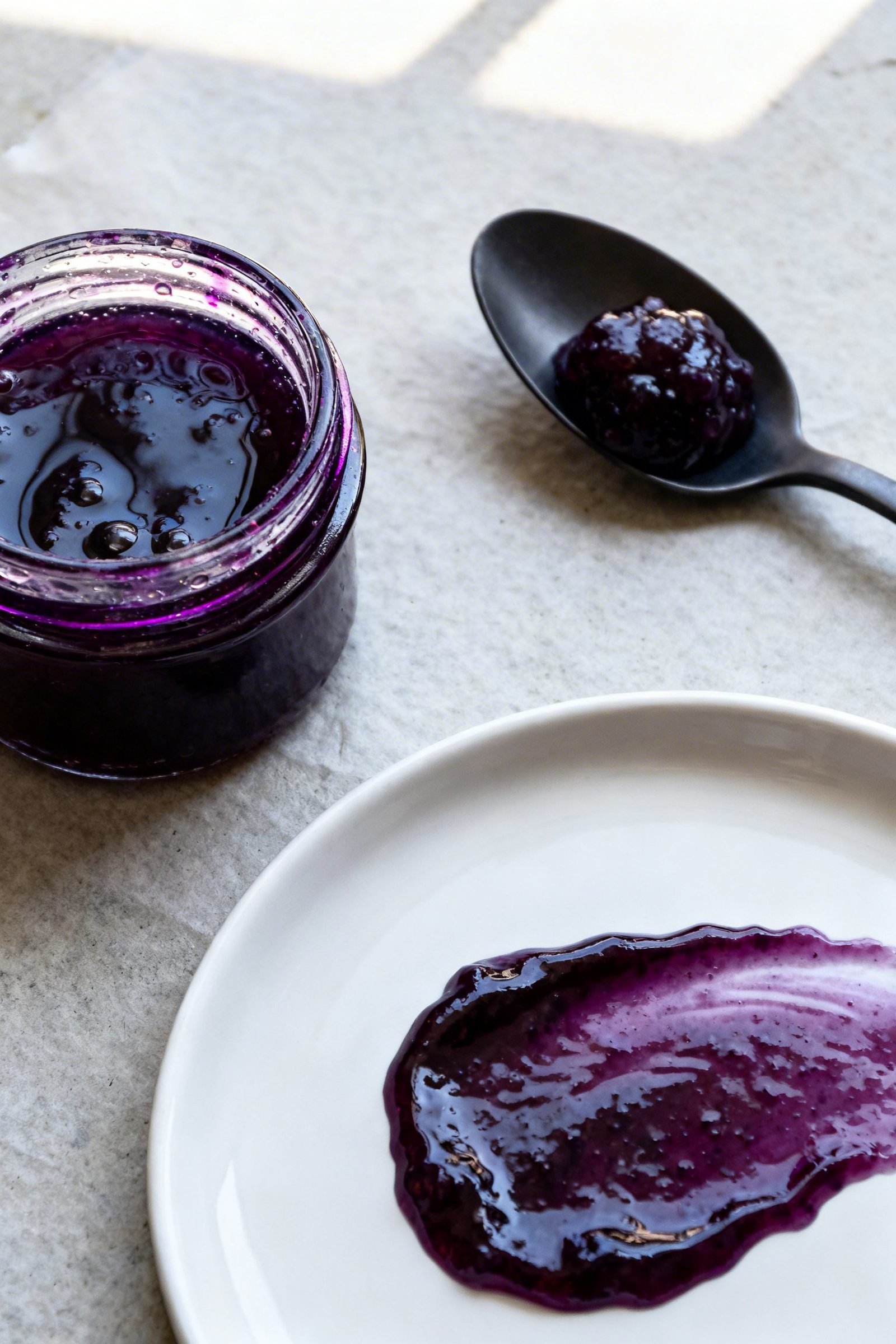
Simple ingredients, big payoff: Just muscadine grapes, sugar, lemon, and a pinch of salt. You coax out natural pectin and bold flavor without fancy add-ins.
- Balanced sweetness and tartness: Lemon juice perks up the grapes and helps the jam set.
- Skin-in simmer for flavor and color: The skins hold tannins and color that create a deep, classic Southern jam.
- No-store-bought pectin needed: You extract pectin by simmering skins and pulp together, then cook to gel stage.
- Foolproof texture: A quick thermometer check or spoon test tells you exactly when it’s done.
Ingredients
- 4 pounds ripe muscadine grapes (scuppernongs work too; use very ripe for best flavor)
- 3 to 4 cups granulated sugar (start with 3; add up to 4 for sweeter grapes or a firmer set)
- 1/4 cup fresh lemon juice (about 2 lemons; adds acid and helps set)
- 1/2 teaspoon fine sea salt (balances sweetness)
- Optional: 1 teaspoon vanilla extract or 1/2 teaspoon ground cinnamon for a cozy note
Equipment
- Large heavy pot or Dutch oven
- Fine-mesh strainer or food mill
- Long-handled spoon and potato masher
- Instant-read or candy thermometer
- Clean glass jars with lids (for fridge/freezer or canning)
How to Make Easy Homemade Muscadine Jam
1) Prep and Separate Skins
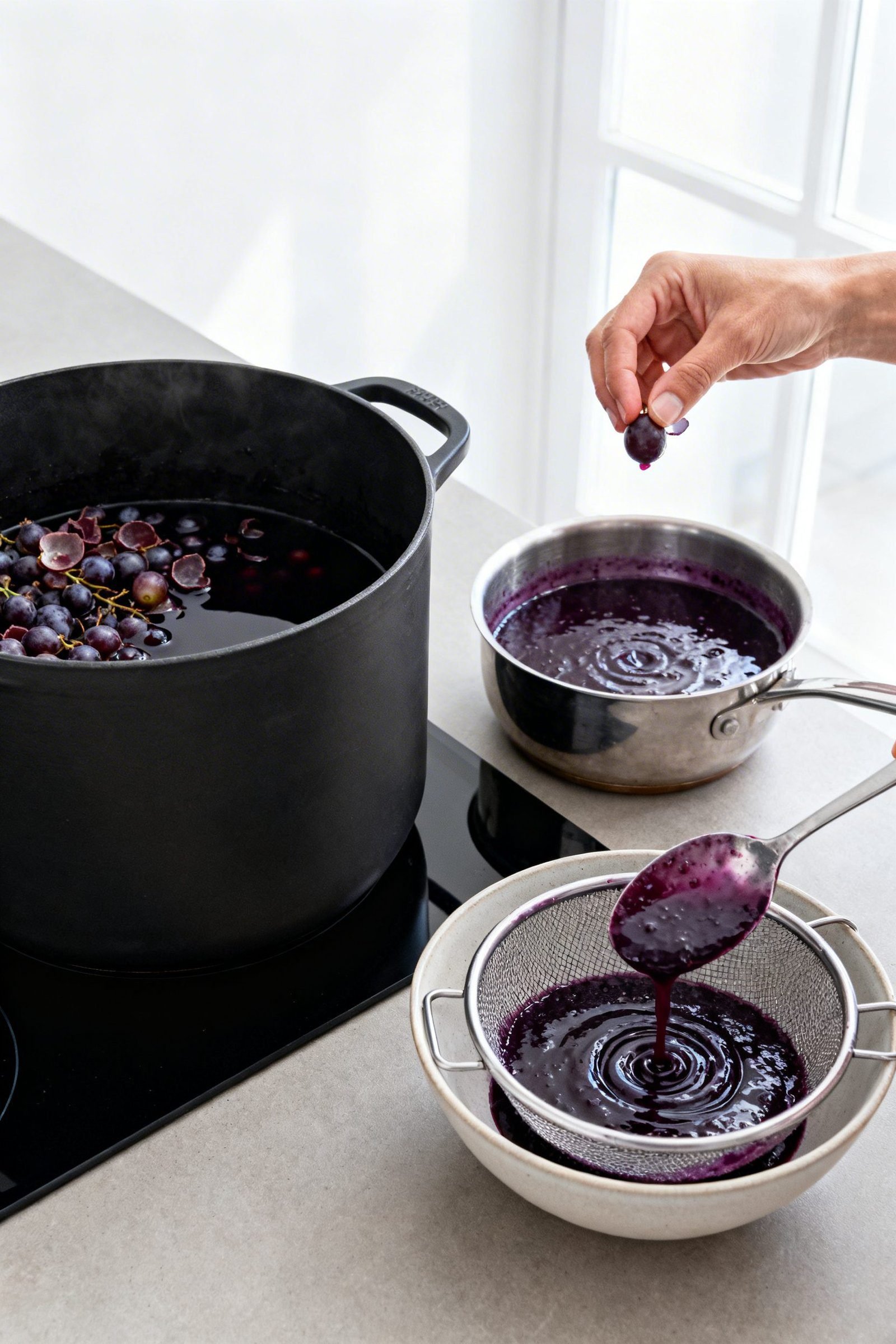
- Rinse grapes well. Pinch each grape to separate the thick skin from the pulp. Drop skins into one bowl and pulp (with seeds) into another.
- Coarsely chop the skins or pulse them a few times in a food processor for a smoother jam.
2) Soften the Skins
- Add skins to the pot with 1/2 cup water. Simmer over medium heat 10–12 minutes until skins soften and the liquid turns deep purple.
3) Cook the Pulp and Remove Seeds
- In a separate saucepan, simmer the pulp 8–10 minutes until it breaks down and seeds loosen.
- Press the hot pulp through a fine-mesh strainer or food mill to remove seeds. You should get a thick, fragrant puree.
4) Combine and Sweeten
- Pour the seedless pulp into the pot with the softened skins.
- Stir in 3 cups sugar, lemon juice, and salt. Bring to a steady boil over medium-high heat, stirring often.
5) Boil to Gel Stage
- Boil briskly 15–25 minutes, stirring frequently and scraping the bottom so it doesn’t scorch.
- Check temperature. Jam sets at 220°F at sea level (subtract 2°F for every 1,000 ft elevation).
- Do a spoon test: Dip a cold spoon, run your finger down the back. If the line holds and the drips “sheet” together, you’re there. If it still runs thin, cook 3–5 minutes more and test again.
- Taste and adjust sweetness. If you prefer sweeter or want a firmer set, add up to 1 more cup sugar and cook 2–3 minutes more.
- Off heat, stir in vanilla or cinnamon if using.
6) Jar It Up
- For the fridge/freezer: Ladle hot jam into clean jars, leaving 1/2-inch headspace. Cool, cap, and refrigerate up to 1 month or freeze up to 6 months.
- For shelf-stable canning: Ladle into hot, sterilized jars leaving 1/4-inch headspace. Wipe rims, apply lids and bands finger-tight. Process in a boiling water bath for 10 minutes (adjust for altitude). Cool 24 hours, then check seals.
How to Store Muscadine Jam
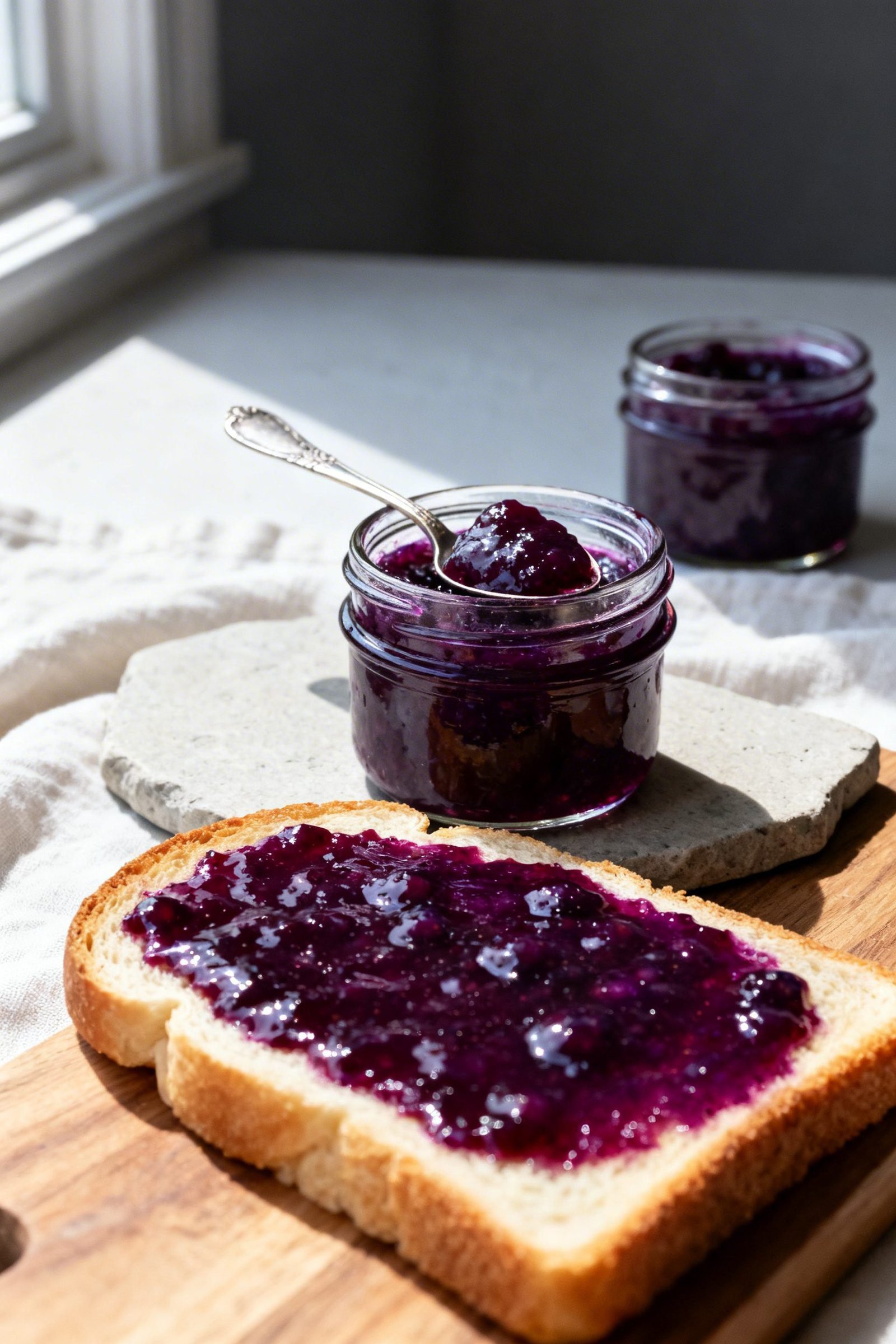
- Refrigerator: Sealed jars keep up to 1 month. Always use a clean spoon.
- Freezer: Leave headspace for expansion. Store up to 6 months. Thaw overnight in the fridge.
- Pantry (canned): Properly processed jars last 12–18 months in a cool, dark place. Label with date.
- After opening: Use within 3–4 weeks for best flavor and texture.
Why Make Your Own Muscadine Jam
- Peak-season flavor: Homemade tastes brighter and fruitier than store-bought.
- Custom sweetness: Dial the sugar exactly how you like it.
- Southern nostalgia: Muscadines bring that front-porch, late-summer magic to every jar.
- Budget-friendly: Farm stand finds turn into a pantry staple you’ll use all year.
- Clean ingredients: No dyes or mystery thickeners—just grapes, lemon, and sugar.
Mistakes to Avoid
- Skipping the skin simmer: You lose color, flavor, and natural pectin if you rush this step.
- Not removing seeds: Seeds add bitterness and grit. Strain thoroughly.
- Underboiling: A short cook leads to runny jam. Aim for 220°F or pass the spoon test.
- Overcooking: If it smells caramelized or turns dull, you’ve gone too far. Pull it as soon as it sheets.
- Guessing acidity: Use fresh lemon juice. It brightens flavor and supports a good set.
- Neglecting headspace: Wrong headspace can cause siphoning during canning or jars that don’t seal.
Flavor Twists to Try
- Honey-kissed: Replace 1/2 cup sugar with honey for floral depth.
- Spiced autumn: Add 1/2 teaspoon cinnamon and a pinch of clove at the end.
- Bourbon vanilla: Stir in 1 tablespoon bourbon and 1 teaspoon vanilla off heat.
- Citrus pop: Add 1 teaspoon finely grated orange zest with the sugar.
- Mixed muscadines: Use both purple muscadines and golden scuppernongs for a layered flavor.
- Low-sugar: Start with 2 1/2 cups sugar and cook a bit longer. Expect a softer set but bright flavor.
FAQ
Do I need commercial pectin?
No. Muscadines contain enough natural pectin when you simmer skins and pulp together. Cook to 220°F or until it sheets off a spoon.
Can I leave the skins whole?
You can, but chopped skins melt into the jam better and create an even texture.
Why didn’t my jam set?
- It may not have reached gel temperature. Reheat and boil a few more minutes.
- Grapes may have been underripe. Add 1–2 tablespoons lemon juice and reboil.
- Too little sugar can slow gelling. Add 1/4–1/2 cup sugar and cook briefly.
How many jars does this make?
About 5 to 6 half-pints (8-ounce jars), depending on how much you cook it down.
Can I double the recipe?
Use a wide pot and stir constantly. Larger batches take longer to reach gel stage. I prefer two smaller batches for consistent results.
What’s the best way to use muscadine jam?
- Spread on biscuits, toast, and PB&J
- Swirl into yogurt, oatmeal, or cheesecake batter
- Glaze pork chops or chicken in the last few minutes of cooking
- Serve with sharp cheddar or creamy brie on a cheese board
Wrapping It Up
Grab those muscadines while they’re ripe and make a pot of jam that tastes like the South in a spoon. With simple steps and a quick boil to gel stage, you’ll stack your pantry with jars that brighten breakfasts and dress up dinners. If you try a variation, report back—I love hearing how your jam turns out.
Easy Muscadine Jam
A smooth, bright, no-pectin Southern muscadine grape jam with balanced sweetness and tartness.
Ingredients
- 4 pounds ripe muscadine grapes (scuppernongs work too)
- 3 to 4 cups granulated sugar (start with 3; add up to 4 to taste or for firmer set)
- ¼ cup fresh lemon juice (about 2 lemons)
- ½ teaspoon fine sea salt
- Optional: 1 teaspoon vanilla extract or ½ teaspoon ground cinnamon
- ½ cup water (for softening skins)
Instructions
- Rinse grapes. Pinch each grape to separate skins from pulp; place skins in one bowl and pulp with seeds in another. Coarsely chop skins or pulse briefly for a smoother jam.
- Add skins and ½ cup water to a large pot. Simmer over medium heat 10–12 minutes until skins soften and liquid turns deep purple.
- In a separate saucepan, simmer the pulp 8–10 minutes until it breaks down and seeds loosen. Press hot pulp through a fine-mesh strainer or food mill to remove seeds.
- Combine the seedless pulp with softened skins in the pot. Stir in 3 cups sugar, lemon juice, and salt. Bring to a steady boil over medium-high heat, stirring often.
- Boil briskly 15–25 minutes, stirring frequently and scraping the bottom. Cook to 220°F at sea level (subtract 2°F per 1,000 ft) or until jam sheets off a spoon.
- Taste and adjust: for sweeter or firmer set, add up to 1 more cup sugar and cook 2–3 minutes more. Off heat, stir in vanilla or cinnamon if using.
- For fridge/freezer: Ladle hot jam into clean jars leaving ½-inch headspace. Cool, cap, and refrigerate up to 1 month or freeze up to 6 months.
- For canning: Ladle into hot, sterilized jars leaving ¼-inch headspace. Wipe rims, apply lids and bands finger-tight. Process in a boiling water bath for 10 minutes (adjust for altitude). Cool 24 hours and check seals.